Terry Zahrenhusen. Technique: Converging LinesThis is a little tricky because the Converging Lines don't converge on anything other than open sky. That's the only reason why this image doesn't make it to super image status. I guess I don't really know what the Center of Interest is. It's an artful use of a 17mm focal length which is optimized because Terry used a 5DMII which has a full frame sensor. Even though it breaks rules, it's a pretty neat image to look at.
 Stephen Racette. Technique: Depth of Field.
This is a pretty interesting image. Yes, it's a Depth of Field application. Watch your focus; the fern frond is not sharp. It also works because of Rule of Thirds. But, the strongest technique is that it breaks a rule: there is no Color Contrast. In fact, it's a monotone image: all green. It definitely works here.
 Sally MacRae Jaffe. Technique: Unknown.
This image pretty clearly demonstrates Rule of Thirds. Nice composition. I think this image could have been more compelling if you had played around with point of view some more. Shoot it from above; shoot it from below. Give us a different perspective to take it to the next level. A better lens would have enabled you to take more of the background out of focus, which would have made your Center of Interest jump more.
 LIsa Lawin. Technique: Unknown.
 It's hard to tell what you intended to do here. It's important to tighten up. Answer the question: what is the Center of Interest? It just can't be all of those pink flowers. If it is, back up and give yourself some more real estate to work with. If the real estate isn't interesting, come in further and take out the foreground out of focus material. Refine your Center of Interest to one of those flowers.
 Larry Weinman. Technique: Converging Lines.
This image is neither fish nor fowl. There are some Converging Lines and some Horizontal Lines. The Center of Interest is well placed. The image just doesn't "sing." Either create more negative space (break the Rule of Thirds) by adding more wall to the right and/or take out the foreground. Conversely, back up even further and make it all about the lines. They really don't converge, though.
 Carlos Nazareth. Techniques: Rule of Thirds, Diagonal Lines.
Pretty image! In addition to Rule of Thirds, this is also an application of Contrast Light and Dark. It's really more a Vertical Lines technique rather than Diagonal Lines even though the line is not up and down. That's because Diagonal Lines implies there are strong intersecting elements not really present here.
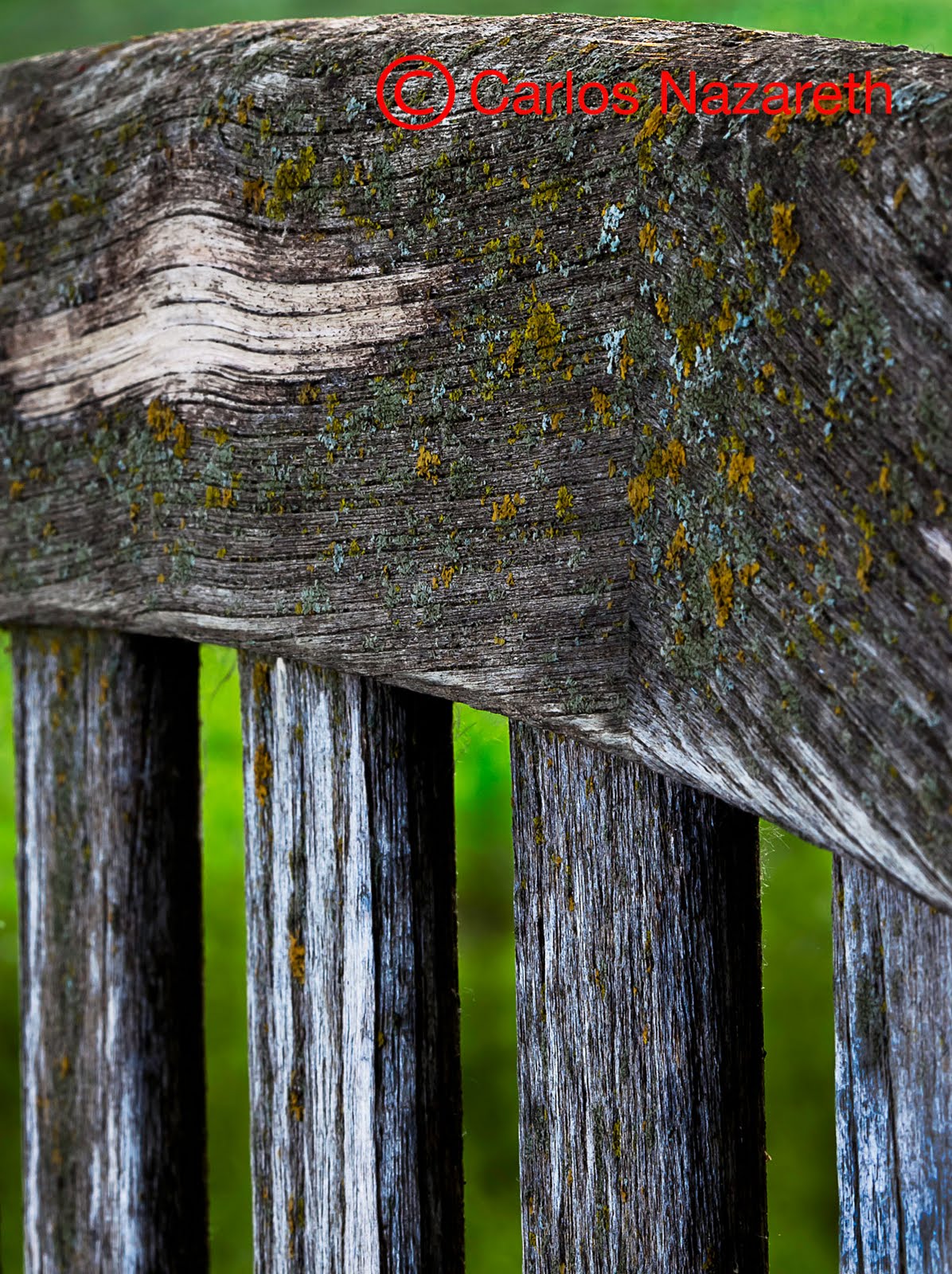
 Carlos Nazareth. Techniques: Vertical Lines, Depth of Field.
This is a good example of using Vertical Lines. The lines give this image a lot of strength. It is NOT a Depth of Field image...everything is in sharp focus. This is an attractive image but it's hard to tell what the Center of Interest is. It must be something but it can't be everything. In this case, the bench back is "everything." So, the image sort of falls apart because of this.
 Jeremy Petrick. Technique: Rule of Thirds.
Ok, I can go along with this. Technically, it is a Rule of Thirds image and it is beautifully executed. The Center of Interest is rather weak. Remember, "what" you are shooting is the first question...and along with it, perhaps this should be expanded to "What does it say?"
 Larry Weinman. Technique: Rule of Thirds.
This is a spectacular example of, not only Rule of Thirds, but also Color Contrast. The flower lines up perfectly on the grid. The flourescent pink stands out perfectly against the green. Regrettably, this flower is out of focus. Your image contained no metadata so I don't know how you shot it. The success of this kind of image is dependent on precise focus. When shooting an object like this, I confirm the focus in live view (focusing manually) before I shoot. Also, stop down so you get enough Depth of Field to get most of the flower head in focus.
 Lisa Lawin. Technique: Framing.
This is a pretty good application of the technique. The image falls pretty far short of being a keeper. I don't like the dead wood infringing into the space where the boat is. As a result, the branch actually crosses the border of the boat. There's probably too much area around the border of the image. I realize this is sort of a grab shot because you don't know when the boat will travel through this spot or if it will at all. Difficult to execute. If you had some more time and patience, you could compose your shot and just wait.
 Rachel Cain. Technique: Unknown.
This image is perplexing because I have no idea what is going on. Quite frankly, I don't particularly care for it. It appears the foreground flower was supposed to be in focus. However, it isn't. The background flower should have probably been the one to be in focus but it's obvious that it's not. The image was shot at f/5.6 which makes it difficult to make any part of the image totally out of focus. I generally don't like dirt as a background. I'd be happy to hear more about what you were trying to do here.
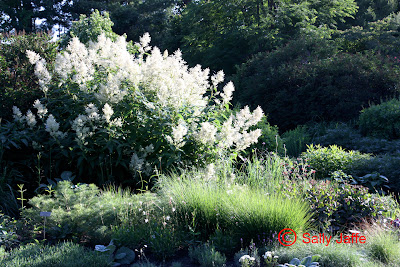
 Sally MacRae Jaffe. Technique: Unknown.
I'm really having trouble figuring out what's going on here. I guess the Center of Interest is the white of the Astilbe (?) bush. There are several factors which make this a challenging composition. A significant improvement would have been made if you had metered just on the white of the blossoms. This would have brought them into better exposure so they wouldn't be so blown out. In the process, you would have lost detail in the rest of the image. However, this might be a good thing. The foreground does nothing for the image. Move in or crop it out. The rest of it could go dark which would strengthen image compositionally. Both Contrast (light and dark) and Rule of Thirds would probably be applicable.
 Stephen Racette. Technique: Rule of Thirds
.
Excellent application of Rule of Thirds. As mentioned later in this post, this scene is pretty flat. Some post processing would enhance it considerably. A small point: I would have moved up a little and taken the corner of the path out all together, leaving a larger crown of the image from the tree.
 Terry Zahrenhusen. Technique: Golden Spiral.
This elegant image is probably an illustration of Phi, not Golden Spiral. Even though there is actually a spiral evident doesn't make it that type of image. The "sweet spot" of a Golden Spiral should contain most, if not all, of the Center of Interest. Assuming the boat house roof is the Center of Interest, this doesn't work. Gorgeous color and tone. It probably would have been a stronger image if you had moved to the left. In doing so, you might have lost the tree silhouette on the right. You don't need it. The absence of content on the right side of the image would have strengthened the impact of the left side.
 Terza Kurki. Technique: Rule of Thirds.
This is a good application of Rule of Thirds. My only problem is the Center of Interest, the bench, is pretty flat against the background. As a result, the whole image is muddy. Either choose a different point of view where there is more contrast, or augment the image as I did below.

I tried to give this image a little zip by using several plug-in tools: Nik Color Efex Foliage to brighten trees and grass, OnOne PhotoTools Golden Enhancer for a bit more mood and Selective Lightening to brighten the bench and pot so they stand out more.
 Tom Alvarez. Technique: Contrast.
This is a pretty good image. Indeed, the contrast between the blue flowers and the background is pretty compelling. The image sort of falls apart, however, because it was shot at f/7.1 so quite a bit of the flower is out of focus. The way to solve this is either use a better lens so you can stop down more and get the flower blossoms in focus or recompose even closer so you can eliminate a large part of the out of focus area.
 Following Images.
I'm lumping all of the images that follow together. I am having a hard time figuring these out. They are all problematic in both technique and content. Most of them fail to clearly identify a Center of Interest. From there, the technique gets really hard because there it's hard to tell what is happening. If you would like to get more input, please e-mail me with more information and I'll be glad to take another look.


For more information,
www.stevesilvermanimaging.com4445 W. 77th St. #130
Edina, MN 55435
952-844-0119 c952-905-1197